Breathing pattern disorder awareness
Breathing pattern disorder (BPD) is a condition where a person develops inefficient or abnormal respiratory habit, often involving over-breathing, mouth breathing or relying on upper chest muscles instead of the diaphragm.
What is a normal breathing pattern?
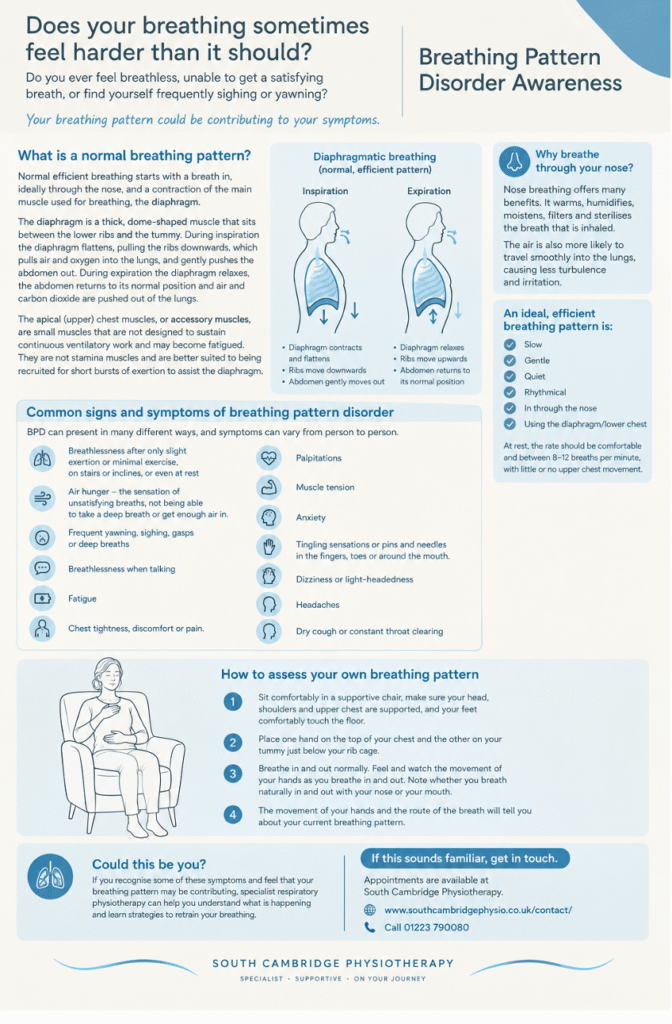
Normal efficient breathing starts with a breath in, ideally through the nose, and a contraction of the main muscle used for breathing, the diaphragm.
The diaphragm is a thick, dome shaped muscle that sits between the lower ribs and the tummy. The diaphragm has a high resistance to fatigue so is ideal for the constant task of breathing. During inspiration the diaphragm flattens, pulling the ribs downwards, which pulls air and oxygen into the lungs, and gently pushes the abdomen out. During expiration the diaphragm relaxes, the abdomen returns to its normal position and air and carbon dioxide are pushed out of the lungs.
The apical (upper) chest muscles, or accessory muscles are small muscles that are not designed to sustain continuous ventilatory work and may become fatigued, they are not stamina muscles and are better suited to being recruited for short bursts of exertion to assist the diaphragm.
An ideal, efficient breathing pattern is a breath in through the nose, using the diaphragm (lower chest). It should be slow, gentle, rhythmical and quiet. The rate should be comfortable and between 8 and 12 breaths per minute at rest. There should be little or no upper chest movement at rest.
Nose breathing offers many benefits, it warms, humidifies, moistens, filters and sterilises the breath that is inhaled. The air is more likely to travel more smoothly into the lungs, causing less turbulence and irritation.
Common Signs and Symptoms of breathing pattern disorder
Feeling breathless after only slight exertion or minimal exercise, on stairs or inclines or even at rest
Air hunger – the sensation of unsatisfying breaths, not being able to take a deep breath or get enough air in. This can result in frequent yawning, sighing, gasps or deep breaths
Breathlessness on talking
Fatigue
Chest tightness, discomfort, or pain.
Palpitations
Muscles tension
Anxiety
Tingling sensations or pins and needles in the fingers, toes, or around the mouth.
Dizziness or light-headedness
Headaches
Dry cough or constant throat clearing
How to assess your own breathing pattern
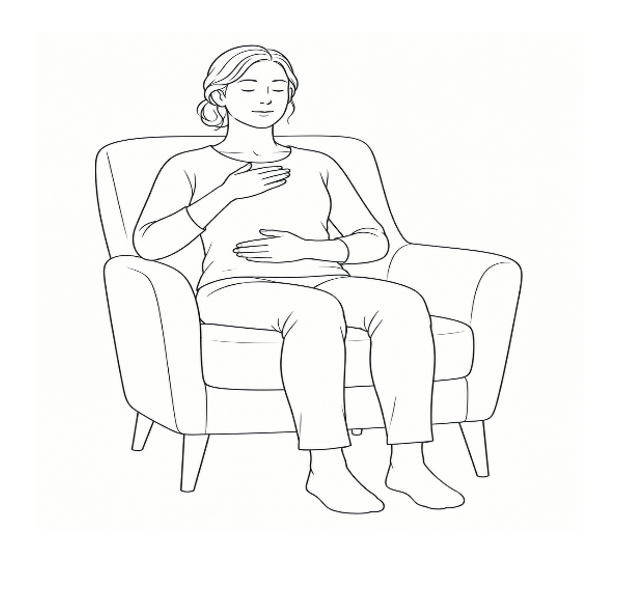
- Sit comfortably in a supportive chair, make sure your head, shoulders and upper chest are supported, and your feet comfortably touch the floor.
- Place one hand on the top of your chest and the other on your tummy just below your rib cage.
- Breathe in and out normally. Feel and watch the movement of the hands as you breathe in and out. Note whether you breath naturally in and out with your nose or your mouth.
- The movement of your hands and the route of the breath will tell you about your current breathing pattern.
- Specialist Respiratory Physiotherapy can help you to understand your breathing pattern, how it can impact on any symptoms that you might be experiencing and how to correct this.
Breathing pattern disorder awareness
Breathing pattern disorder (BPD) is a condition where a person develops inefficient or abnormal respiratory habit, often involving over-breathing, mouth breathing or relying on upper chest muscles instead of the diaphragm.
What is a normal breathing pattern?
Normal efficient breathing starts with a breath in, ideally through the nose, and a contraction of the main muscle used for breathing, the diaphragm.
The diaphragm is a thick, dome shaped muscle that sits between the lower ribs and the tummy. The diaphragm has a high resistance to fatigue so is ideal for the constant task of breathing. During inspiration the diaphragm flattens, pulling the ribs downwards, which pulls air and oxygen into the lungs, and gently pushes the abdomen out. During expiration the diaphragm relaxes, the abdomen returns to its normal position and air and carbon dioxide are pushed out of the lungs.
The apical (upper) chest muscles, or accessory muscles are small muscles that are not designed to sustain continuous ventilatory work and may become fatigued, they are not stamina muscles and are better suited to being recruited for short bursts of exertion to assist the diaphragm.
An ideal, efficient breathing pattern is a breath in through the nose, using the diaphragm (lower chest). It should be slow, gentle, rhythmical and quiet. The rate should be comfortable and between 8 and 12 breaths per minute at rest. There should be little or no upper chest movement at rest.
Nose breathing offers many benefits, it warms, humidifies, moistens, filters and sterilises the breath that is inhaled. The air is more likely to travel more smoothly into the lungs, causing less turbulence and irritation.
Common Signs and Symptoms of breathing pattern disorder
Feeling breathless after only slight exertion or minimal exercise, on stairs or inclines or even at rest
Air hunger – the sensation of unsatisfying breaths, not being able to take a deep breath or get enough air in. This can result in frequent yawning, sighing, gasps or deep breaths
Breathlessness on talking
Fatigue
Chest tightness, discomfort, or pain.
Palpitations
Muscles tension
Anxiety
Tingling sensations or pins and needles in the fingers, toes, or around the mouth.
Dizziness or light-headedness
Headaches
Dry cough or constant throat clearing
How to assess your own breathing pattern
- Sit comfortably in a supportive chair, make sure your head, shoulders and upper chest are supported, and your feet comfortably touch the floor.
- Place one hand on the top of your chest and the other on your tummy just below your rib cage.
- Breathe in and out normally. Feel and watch the movement of the hands as you breathe in and out. Note whether you breath naturally in and out with your nose or your mouth.
- The movement of your hands and the route of the breath will tell you about your current breathing pattern.
- Specialist Respiratory Physiotherapy can help you to understand your breathing pattern, how it can impact on any symptoms that you might be experiencing and how to correct this.